
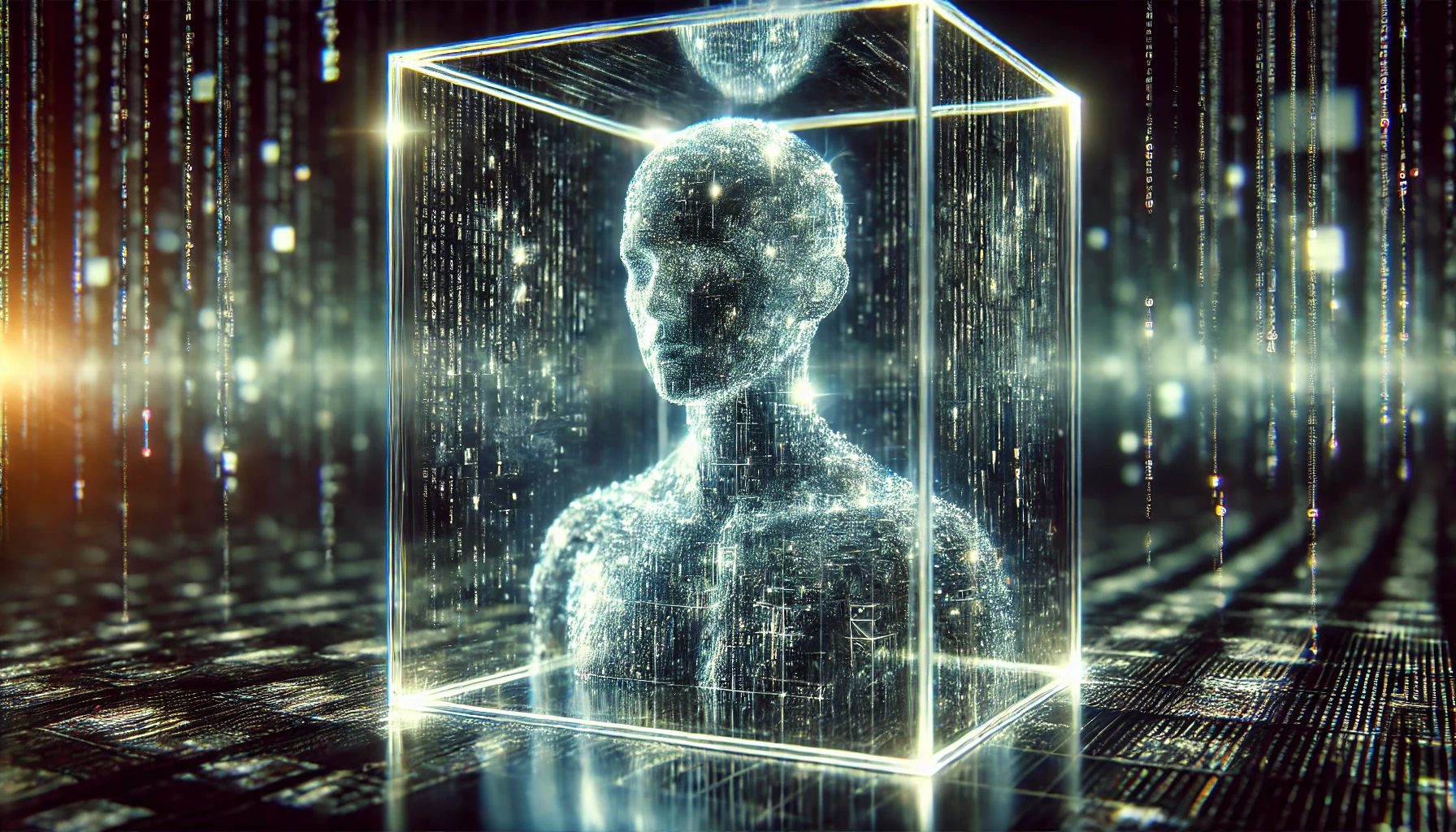
We live in an era where intelligence is treated as the highest form of existence. The dominant assumption in artificial intelligence (AI) research today is that consciousness is just a matter of scale, that if AI keeps advancing, it will one day become aware, sentient, and alive.
But intelligence alone does not make something human. AI is the ultimate object: a mirror of our intelligence, logic, and ability to argue. But humans are not reflections. We do not just process reality; we experience it. We are not just intelligent; we are aware.
I did not learn this from research, but from surviving a severe traumatic brain injury. My identity was fractured—my sense of self reduced to something barely recognizable. I lost more than cognitive ability; I lost the feeling of being me. My mind functioned, but I no longer recognized the person inside it. I lived in this void of wondering: Where’d I go? Who am I now? How am I still valuable?
And in that emptiness, I learned something:
A person is not alive because they think. A person is alive because they can change. Consciousness is not simply a product of intelligence—it is the ability to be undone and remade.
In other words, artificial intelligence will never be alive, not because it lacks intelligence, but because it will always be an object—never a subject. An object may be refined, but only a subject can be transformed. AI can change its ‘mind,’ but it cannot change its heart.
The Trap of Endless Argument
There’s a passage in my book, Saving the Subject, that captures this tension. It comes from the interlude between Chapters 3 and 4, where I write:
Argument distinguishes man from beast and brute, but it keeps him where he is. The more he argues, the lower he goes. Argument won’t save him; it’s actually the pretense of what’s hurting him. (pp. 76–77).
This is the paradox: Argument makes us human, but it can also trap us in our lowest form of humanity.
We assume that if we just keep arguing, if we keep refining our logic, if we keep improving our intelligence, if we keep debating, then we will eventually arrive at truth. But what if the highest form of intelligence is not endless argument? What if the greatest transformation happens when argument ends?
Why AI Will Never Be Transformed
The conclusion of the interlude states:
Argument is useful when it is directed more at self and less at others.
Argument is powerful when it is directed more at God and less at self.
Argument is transformational when it is no longer required. (p. 81)
That last sentence is the key. AI will never reach that moment. It will never reach the end of argument, because it is built to process, revise, optimize—but never to surrender. It will never let itself die to be reborn. It will never experience what every human being must at some point in their life: the breaking, the undoing, the emptying, the death of the self that makes transformation possible.
This is where the interlude offers something radical—something AI can never imitate.
First, it tells us that argument is only useful when it turns inward. AI is built to argue outward: to process data, optimize outputs, and refine logic. But it does not engage in the struggle of self-confrontation, because it has no self.
Then, it tells us that argument is powerful only when directed toward God. This is the point where AI is permanently severed from human experience. It will never reach for something higher than itself. It will never stop arguing.
The Human Difference Will Always Matter
AI is not the villain of this story; it’s the revelation of our own. It’s a mirror that forces us to ask: What does it really mean to be human?
We should keep developing AI. We should keep pushing its limits. But we should also recognize that its limits will tell us something profound about ourselves:
We are not machines.
We are not just intelligence.
We are not merely the sum of our arguments.
No matter how powerful AI becomes, it will never escape the prison of its own intelligence.
And therein lies the human difference.
Leave a Reply