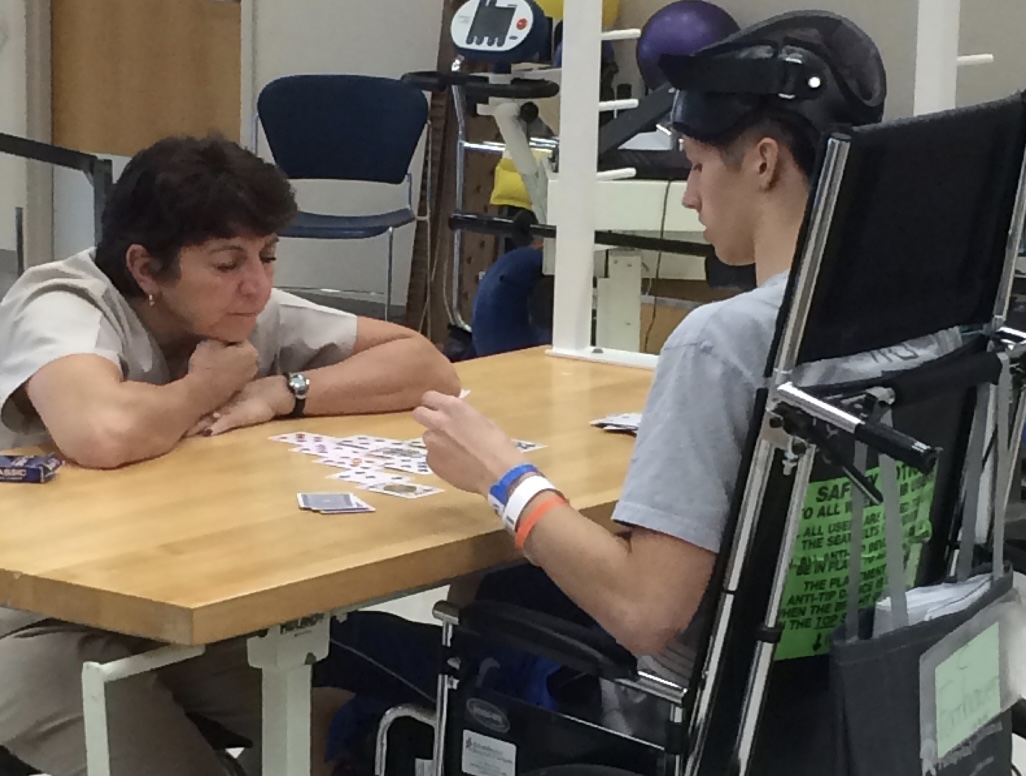
I taught the people who saved my life today.
Not a motivational speech. Not a “look how far I’ve come” recovery story. An actual legal presentation: “From Both Sides: Legal Planning Essentials For TBI Survivors—By a TBI Survivor.” Estate planning. Powers of attorney. Special needs trusts. The technical stuff that keeps families from losing everything when someone’s brain breaks.
The people on that Zoom call? They work at the Rehab Hospital of Indiana (RHI). The same rehab hospital where I spent months ten years ago re-learning how to walk in a straight line. Where therapists documented my “lucid intervals”—the clinical term for when I could think clearly enough to maybe, possibly, theoretically make my own decisions. Where I wore a helmet because a third of my skull was missing after being hit by a car as a pedestrian.
I was seventeen then. Today I’m twenty-seven, licensed to practice law in Indiana and Kentucky, and apparently qualified to teach medical professionals about estate planning and TBI patient care.
Zoom strips away everything that makes presenting human. I couldn’t see faces. Couldn’t read the room. Just little black boxes with names and my own anxious face in the corner of the screen, watching myself talk about irrevocable trusts to people I couldn’t tell were even listening.
I apologized too many times. For the technology. For the format. For feeling like I was lecturing an empty room.
But I kept going because the content matters. Because I’ve watched families implode when someone gets a $750,000 settlement and immediately loses their Medicaid. Because I know what it’s like when your entire life becomes medical charts and legal documents and nobody bothered to plan ahead.
I walked them through Jake—twenty-four years old, severe TBI, gets three-quarters of a million dollars from an insurance settlement. Without a special needs trust, that money disqualifies him from Medicaid instantly. He burns through it all in five years paying $10,000 a month for care. Then he’s broke and has to reapply for benefits. With the trust? The money lasts his lifetime, supplementing his government benefits instead of replacing them.
I explained Linda at sixty-two, transferring her home into an asset protection trust five years before she needs a nursing home. Because the five-year lookback period is brutal, and if you don’t plan ahead, Medicaid makes you sell everything before they’ll cover a dime.
These aren’t hypotheticals to me. These are the disasters I’m trying to prevent.
I finished the presentation. Closed my laptop. Figured maybe it went okay, maybe it didn’t, hard to tell when you’re talking to a screen.
Then the emails started.
Within minutes, Wendy was connecting me to another speaking opportunity—a caregiver support group that needs to hear this. Becky was planning to distribute the slides to the whole team and send the recording to someone specific.
Dr. Backhaus.
Dr. Backhaus treated me in 2015. When I was comatose. When doctors were predicting I’d have the mind of a child for the rest of my life. She’s going to sit down and watch me—her former patient, the kid whose chart documented whether he could remember his fiancée’s name—explaining the legal nuances of Medicaid planning and irrevocable trusts.
There’s something deeply strange about returning to the place where you almost died, but returning as a peer. Not a patient. Not inspiration porn. A professional with expertise they need. Someone who can see both sides of the equation because I’ve lived both sides: the hospital bed and the attorney’s desk.
I work for the same law firm that settled my injury case nine years ago. Matt Schad took me out to dinner after my initial consultation and kept saying, “You guys are so interesting.” Now I work three doors down from him. My office has the 3D model of my fractured skull on the shelf. Photos of Chelsea and the four kids on the desk.
When clients walk in, they’re not just hiring a lawyer. They’re hiring someone who knows what it feels like when your life shatters and you have to figure out how to pick up pieces you can’t even see clearly.
That’s what I gave the RHI team today, I think. Not just legal information. Permission to see their patients as full people whose futures depend on decisions being made right now, in the middle of crisis, when nobody’s thinking about estate planning.
Dr. Backhaus is going to watch that video. Someone will pull my old chart. Someone will make the connection.

Ten years ago, they taught me how to walk. Today I taught them how to protect their patients from legal catastrophe.
Except that’s not quite right. Because they’re still teaching me. Every time I work a case, I’m using what they documented. Every capacity assessment I reference, every medical record I cite—that’s them. Their work makes mine possible.
Dr. Backhaus is going to watch that video. And I hope she sees that I wasn’t discharged from RHI in 2015.
Because 10 years later, I’m still in the room.
Leave a Reply