
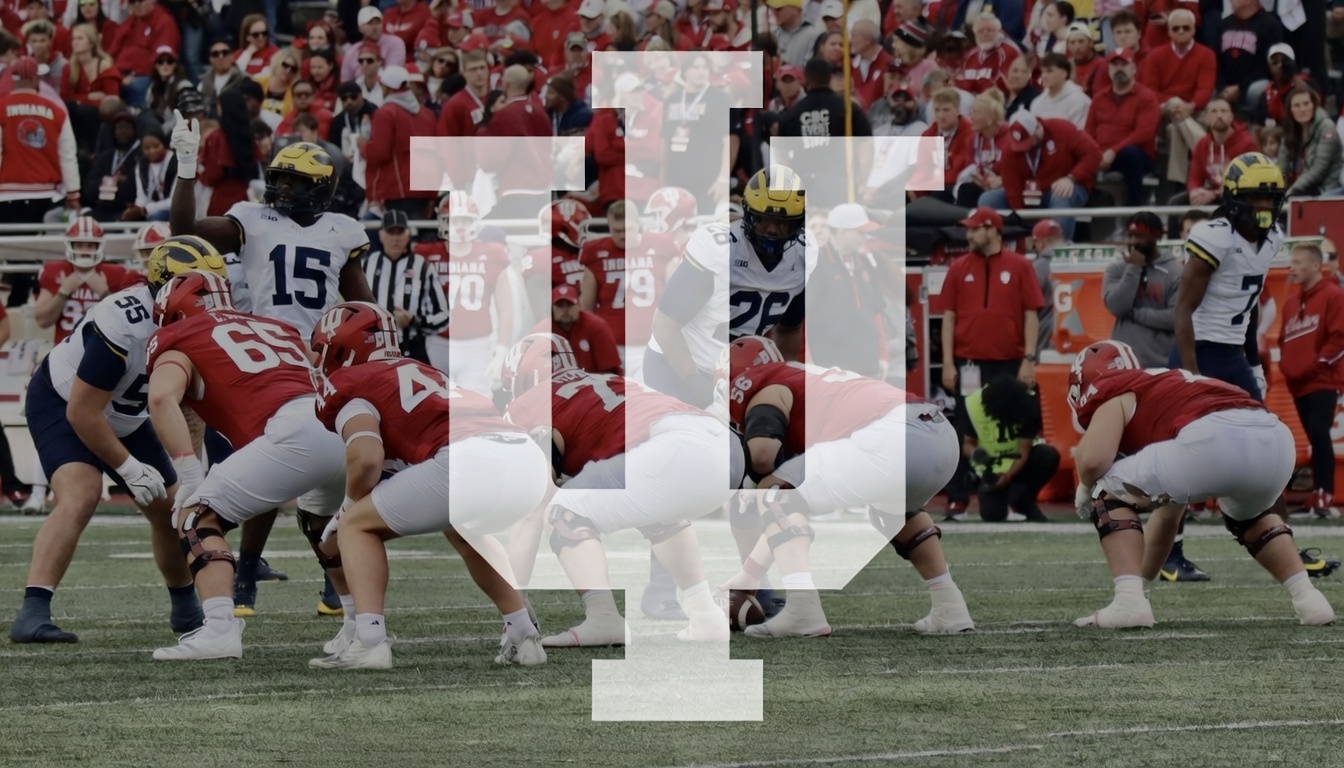
Oregon had six five-star recruits. Indiana had zero.
Oregon entered with one of the most talented rosters in the country. Indiana’s ranked 72nd nationally—behind teams that didn’t even make a bowl game.
Final score: Indiana 56, Oregon 22.
When quarterback Fernando Mendoza tried to explain what just happened, he reached for the repeated motif: “We’re a bunch of misfits. There are zero five-stars on our team. We’re just a bunch of gritty guys who are glued together and going toward a common goal.”
That’s the story of Indiana’s 15-0 season heading into Monday’s national championship game. They are about to play for a national title because they figured out something the analytics couldn’t measure: that greatness emerges from how you hold each other up, not from individual performance metrics. And we’re about to learn the same lesson with artificial intelligence (AI).
Indeed, many are panicking about machines replacing humans. AI will write better, code faster, analyze deeper. It’ll outperform us at tasks we spent years mastering. The anxiety is real, and often justified. But the panic assumes our value lies primarily in what we produce rather than how we relate and show up for each other.
Watch how Mendoza talks about his Heisman Trophy. When asked about winning college football’s most prestigious individual award, he immediately deflected: “It’s really a credit to our team. It’s a team award.” Later, during the season, he put it even more beautifully: “I’m shining now, but only because there are so many stars around me.”
That’s not false modesty. That’s the entire point.
Before the Purdue game, center Pat Coogan gave a speech that captured what this team actually is: “Look at us, a bunch of misfits, guys from FCS, Group of Five, James Madison, coming up, a bunch of transfers, a bunch of rejects that got replaced at their old schools coming to Indiana . . . all the misfits from across the nation coming together.”
The offensive line nobody remembers blocks for the quarterback everyone celebrates. That’s not a consolation prize. That’s how greatness actually works.
AI can draft documents and optimize processes. What it cannot do—what it will never do—is sit across from someone whose life just fell apart and carry the weight of that moment with them. It cannot bear witness to suffering. It cannot hold another person in their darkest hour and mean it.
That’s not a limitation of current technology waiting to be solved. That’s the permanent difference between objects and subjects, between tools and persons. AI processes information. Humans hold each other.
Your worth isn’t in what you produce. It’s in who you are with people. It’s in the unsexy, uncelebrated work of showing up when the stats say quit. It’s in the trust that lets a quarterback drop back without looking because he knows five guys are holding the pocket.
This matters more than ever because we’re entering an era where machines will outperform us individually at almost every measurable task. But they cannot—they fundamentally cannot—participate in the mutual recognition between subjects that makes us human. They can simulate presence, but they cannot be present. They can mimic empathy, but they cannot share in suffering.
What Indiana figured out on the football field applies to everything ahead: In an age where machines can outperform us individually, relational dependence might be the only thing that actually makes us irreplaceable—not as things, but as beings. Because greatness emerges not from standing alone but from being held up.
January 19th will tell us whether Indiana can finish what they started. But they’ve already taught us something more important: The future belongs not to those who work alone, but to those who’ve learned to work together.
Go Hoosiers! Win the natty!
p/c: The Daily Hoosier (modified by author)
Leave a Reply