As a lawyer, a father, and a man who has faced life’s fragility head-on, I’ve learned that not all wisdom comes from certainty. There’s a bounty of strength found in the embrace of the unknown and the unresolved. Sometimes, the best thing you can say is, “I don’t know.”
Our world is obsessed with knowing things. Turn on your phone, and voices scream answers: Google and ChatGPT race to solve what you haven’t asked. We’ve built a tower of knowledge so high it’s a wonder we don’t topple under its weight.
I used to think knowing more things was the goal. Before the accident—before my skull met that Lexus windshield on September 18, 2015—I was a kid who knew ‘all the things.’ I knew I’d marry Chelsea, preach the gospel, dunk a basketball—life was a straight line charted by me alone.
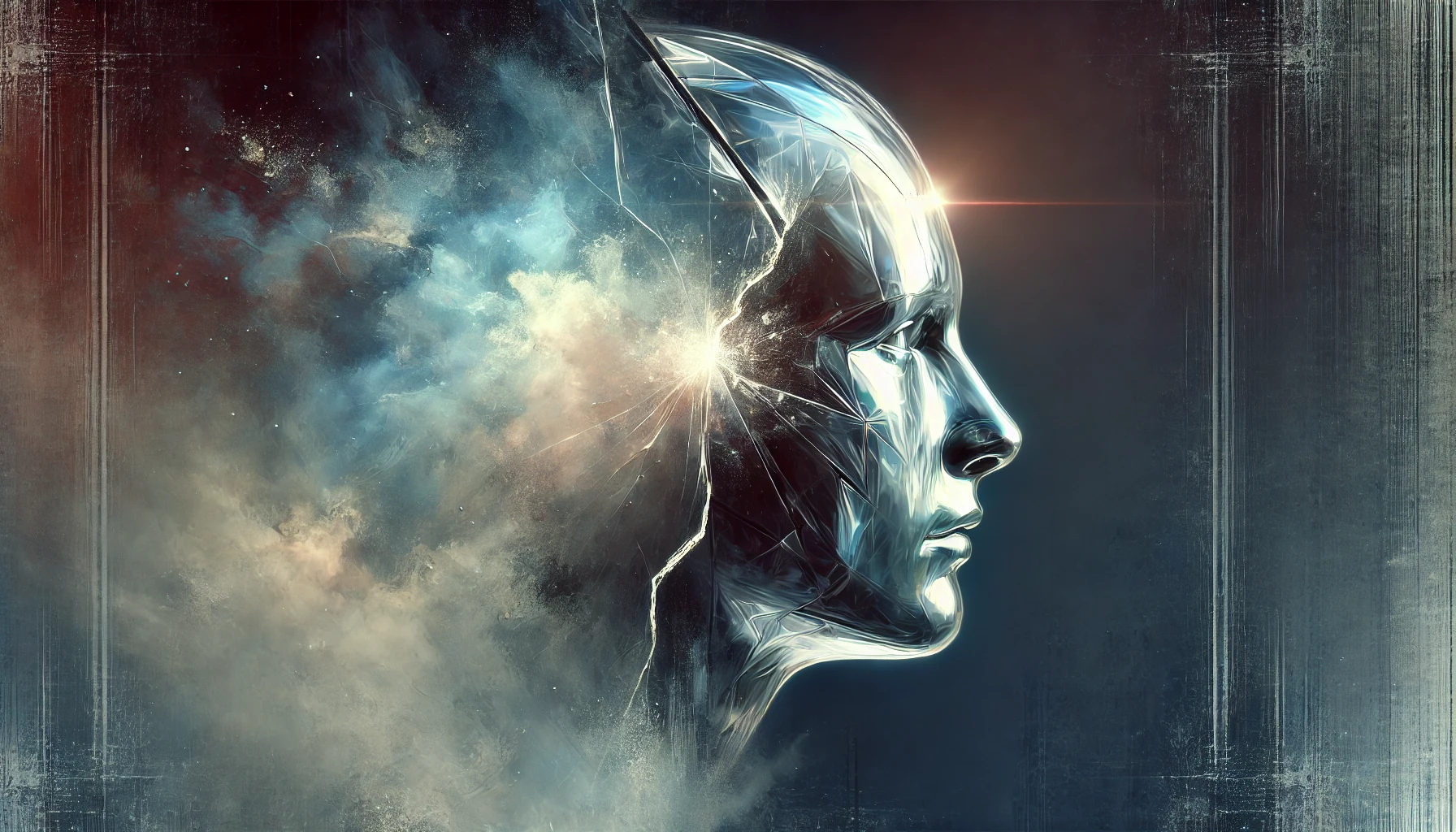
Then the world (and my skull) cracked open, and I woke up in a hospital bed not knowing my own name, let alone hers. I didn’t know how to walk or why my voice sounded like gravel. I didn’t know who I was anymore. That was the first time I felt the silence of not knowing, a silence louder than any sermon.
People wanted answers after the coma—did I see God, hear angels? “It was dark,” I’d say while shrugging. They’d nod, disappointed, and I’d fight the urge to invent something to fill the void. But the truth was stark: I just didn’t know. And that truth should be enough.
We don’t like blank space. It’s why we are captivated by Artificial Intelligence (AI), why we scroll social media for hours looking for someone to tell us what’s what. But what if not knowing is the best position? What if it’s a solid place to stand?
The Bible’s full of people who didn’t know. Moses didn’t know how to free a nation with a stutter and a stick. Gideon didn’t know how he could defeat an army with just 300 men. Mary didn’t know how a virgin could carry a king. God seems to pick the ignorant on purpose, not to shame them, but to show them something better than knowledge: Trust.
“Trust in the Lord with all your heart and lean not on your own understanding” (Proverbs 3:5). Lean not on what you know, but on Who is in control. I didn’t know how I’d walk again, but I trusted the One who made legs. I didn’t know how I’d get through law school with suicidal desires haunting me daily, but I trusted the One who speaks galaxies into being. Not knowing became my teacher, and trust became my lesson.
This isn’t to say knowledge is bad. I’m a lawyer—I live by facts, precedents, arguments. I read and learn all the time. But knowledge is an object, a thing I hold, not a subject who holds me. It’s a tool, not a master.
The trouble starts when we let knowledge rule us, when we trade the mystery of being for the certainty of doing. Look at our culture: we’ve got more data than ever, yet we’re lonelier than ever. Suicide rates climb, marriages crumble, kids grow up on screens instead of swings. We are great at knowing but who’s great at living? Maybe that’s because we’ve forgotten how to say, “I don’t know,” and mean it.
Indeed, we’ve swapped trust for control, silence for noise. I see it in the courtroom, where every case is a battle to know more than the other side. I see it in church, where we argue theology like it’s a math problem. I saw it in myself after the accident, clawing to know who I’d become, as if knowing would fix the fracture. But it didn’t.
What fixed me—or what’s still fixing me—is admitting I don’t know and resting in the One who does. “For now we see through a glass, darkly,” Paul writes in 1 Corinthians 13:12, “but then face to face.” The unknown is a necessary shadow before the light.
You don’t have to know everything to be something. You don’t have to name every star to see the sky. I don’t know why I’m still here, why a car didn’t end me, why God picked a guy with a fractured skull to father four miracles and argue legal cases in two states. I don’t know where this is going, and I’m okay with that. For I believe “[t]he Lord is my shepherd” (Psalm 23:1), and that answers everything.
These ideas are from my new book, Saving the Subject: How I Found You When I Almost Lost Me. Available on Amazon in Kindle, Hardcover, and Paperback.
Leave a Reply to How Not Knowing Can Equal Everything – Nonyelu Anyichie -kaleidoscopeCancel reply