A couple times a week, I work remotely at the Southern Baptist Theological Seminary in Louisville, Kentucky. I remember when I first walked these halls as a young teenager—when the campus felt alive and magical, when my dreams were vivid and palpable. I took dual-enrollment courses during my junior year of high school, drawn by an unshakable sense that God was calling me to full time pastoral ministry. Nostalgia isn’t what draws me back here. It’s the mysterious convergence of my past and present.
At sixteen, I was the peculiar student-athlete who spent mornings in public high school classrooms, afternoons in the gym, and evenings listening to lectures by R. C. Sproul or sermons by Charles Spurgeon. Friends and family often found me in the basement at a desk scattered with theology books, scrap paper reflections, and pens—yes, lots and lots of pens.
At that desk, I solved Algebra 2 equations while contemplating the doctrine of providence. I polished history projects while daydreaming about eschatology (i.e., where everything is going). I prepared classroom presentations while praying for my classmates by name. I wrote constantly. Without realizing it, those hours helped form me—not just as a writer, but as a believer.
By senior year, I felt steady—kept writing and kept reading—like I knew the shape my life would take. I had plans. I had direction. But what I didn’t know was that a single moment would unravel it all:
That I would be hit by a car while riding a skateboard.
That I would spend nearly three weeks in an unmedicated coma.
That I would have to rebuild myself from the ground up.
Ten years later, I find myself back on campus—not as a student, not as a pastor-in-training, but as a husband, a father of four, a lawyer, and an author. I still come with a backpack and a laptop, just like I used to, but the person carrying them is different now. He’s quieter. More deliberate. More mindful.
I sit in the library or the corner of the coffee shop, drafting motions for traumatic brain injury cases, emailing opposing counsel, or writing articles about AI and human worth—things I never would’ve imagined thinking about back then, but now, in hindsight, feel like the natural continuation of everything that started here.
Because this campus planted seeds in me—a love for theology, clarity of thought, and a reverence for big questions. All of that still shapes my work today. But the difference is: I didn’t learn just by reading. I learned first by living out the very questions I was studying:
Who are we without our abilities?
How can we suffer in the most God-honoring way?
What defines our humanity?
A scholar’s strength generally lies in asking the right questions. That’s usually the key to great research, writing, and academic achievement. But unlike most theologians or scholars, I didn’t start with the questions. I started with life, suffering, struggle, and the questions eventually became my answers.
Academic life was hardly abstract for me. I learned about biblical counseling while being the one in desperate need of counsel. I learned about sermon prep while needing a word of encouragement daily. I learned to think about God while begging Him to notice me.
Each day at the seminary was another day looking for answers to the chaos tearing through me. In those early, breathless years of recovery, I didn’t have the lungs for any of my questions. I know it sounds backwards, but the right questions came only after I found the answers.
While I never became a vocational preacher or professor, I’m still a minister, and a minister shaped by lived theology.
Yes, the sixteen-year-old with Spurgeon sermons in his earbuds still walks these halls somewhere inside me. But so does the man who came out of the coma. So does the father who held triplets in the NICU. So does the attorney who tells other survivors their stories matter.
This place is sacred to me—not because it’s pristine, but because it holds echoes:
Echoes of where I’ve been.
Echoes of where I might’ve gone.
Echoes of who I still hope to become.
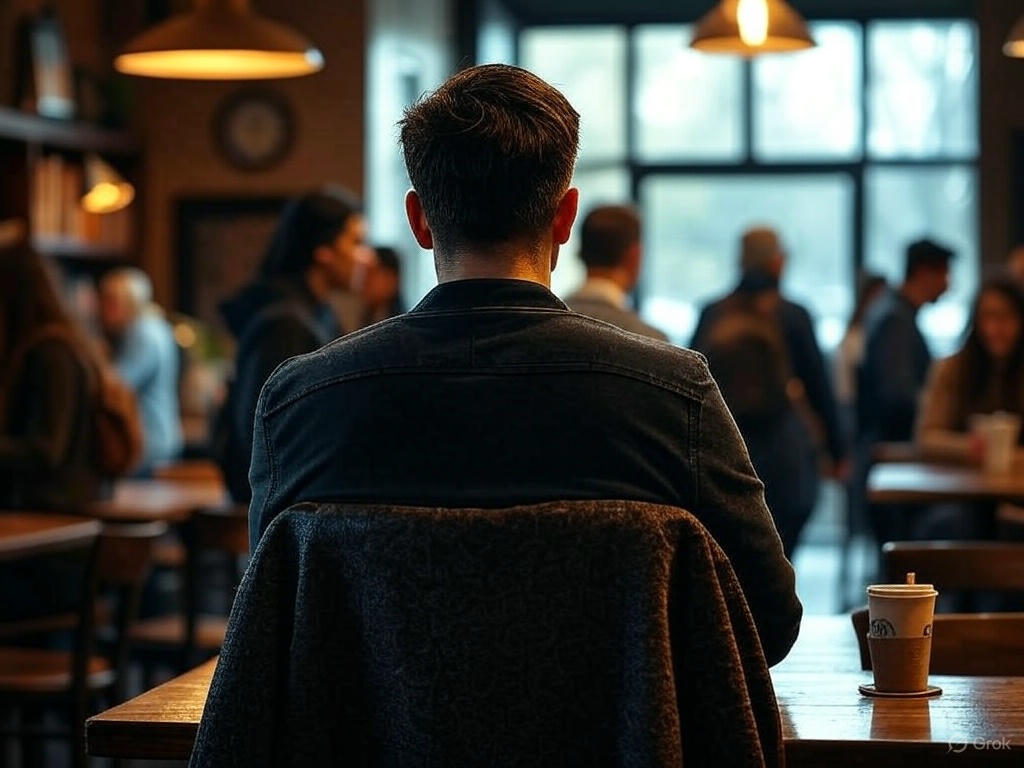
Most days, I keep to myself. I sit quietly, coffee in hand, fingers tapping the keyboard. But sometimes I wonder if anyone walking by knows what it cost me to type these words. If they know the man in the corner had to relearn how to think. If they realize the brain he’s using was once called “beyond repair.”
Yet, here I am—
Still thinking.
Still believing.
Still being made new.

Leave a Reply